
The short answer
Guilt, shame and embarrassment are the self-conscious emotions: feelings about who we are and how we look to others. Guilt focuses on something you did and pushes you to repair it. Shame focuses on who you are and makes you want to hide. Embarrassment is a lighter, short-lived discomfort about a social slip. To deal with them, ask whether there is something real to put right and do it, separate what you did from who you are, talk to someone you trust rather than hiding, and treat yourself with the same kindness you would offer a friend.
You snapped at your child this morning, and you’ve been thinking about the look on her face all day. You forgot a friend’s birthday and only remembered when you saw the photos. You said something stupid at a party three years ago and it still makes your stomach drop when you think about it.
Guilt, shame and embarrassment are some of the most uncomfortable feelings we have. They’re also some of the most human. Psychologists call them self-conscious emotions, because they involve looking at ourselves, often through other people’s eyes. They help us live with others, keep our promises and repair our mistakes. But they can also get stuck, grow out of proportion and weigh on people for years.
This guide is about telling them apart, listening to what they’re saying and putting them down when they’ve done their job.
Three feelings that are easy to confuse
Guilt
Guilt is the feeling that you did something wrong. It focuses on a specific action: I shouldn’t have said that, I should have called. It often comes with regret, a wish to undo what happened and a pull toward making amends.
Shame
Shame is the feeling that you are wrong. Instead of “I did a bad thing”, it says “I am a bad person”. It tends to come with a desire to hide, disappear or shrink, and it often feels physical: a hot face, a sinking stomach, eyes that won’t meet anyone else’s.
Embarrassment
Embarrassment is a lighter, short-lived discomfort about a social slip: tripping on the stairs, calling someone by the wrong name, spilling a drink. It usually involves a blush and an awkward laugh, and it passes quickly, though some embarrassing moments have a way of returning years later.
We explain the difference between the first two in more depth in Guilt vs Shame: What’s the Difference?
Why these feelings exist
Humans have always depended on their group. For our ancestors, being rejected could mean not surviving. Self-conscious emotions helped people keep their place in the group by noticing when they had let others down and doing something about it.
Guilt pushes us to repair harm. Embarrassment signals to others that we know we slipped up, which tends to make them more forgiving. In research by Matthew Feinberg and colleagues, people who showed embarrassment after a mistake were seen as more trustworthy and generous than people who didn’t. Even shame, painful as it is, once served to keep people from doing things that would get them pushed out.
In their right size, these feelings make us better partners, parents, friends and colleagues. The trouble starts when they’re too big, last too long, or attach themselves to the wrong things.
Why guilt and shame get stuck
There’s nothing left to repair
Guilt is meant to lead to action. When there’s nothing you can do, because the person has died, the moment has passed or it was never your fault in the first place, the guilt has nowhere to go and keeps circling.
Guilt turns into shame
When people go over a mistake again and again, “I did something wrong” can slowly become “I’m the kind of person who does wrong things”. At that point the feeling has shifted from guilt, which can be resolved, to shame, which is harder to shift.
Old messages
People who grew up with a lot of criticism, or with love that seemed to depend on being good, often carry a background sense of not being good enough. New mistakes plug straight into that old feeling. We look at this in Toxic Shame: How to Stop Feeling Ashamed of Yourself.
Hiding
Shame makes people want to hide what happened. But secrecy tends to feed shame. The researcher Brené Brown, who has studied shame for many years, describes it as needing secrecy, silence and judgment to grow, and empathy as one of its strongest antidotes.
Rumination
Replaying an embarrassing moment or a painful mistake keeps the feeling alive. Each replay strengthens the memory. How to Stop Thinking About Embarrassing Moments explains how to break the loop.
How to deal with guilt
- Ask whether it’s deserved. Did you actually do something wrong, or are you feeling guilty for something outside your control, or for meeting your own needs?
- If it is, repair what you can. Apologize sincerely, make amends, change what you do next time. Then let the guilt know its job is done.
- If it isn’t, say so to yourself. “This isn’t my responsibility” may need repeating many times before the feeling follows.
- Learn the lesson, then put it down. Guilt is useful as a teacher, not as a punishment.
How to Deal With Guilt goes through this in more detail, including the guilt that comes from resting, saying no or surviving when others didn’t.
How to deal with shame
- Separate what you did from who you are. You made a mistake. That doesn’t make you a mistake.
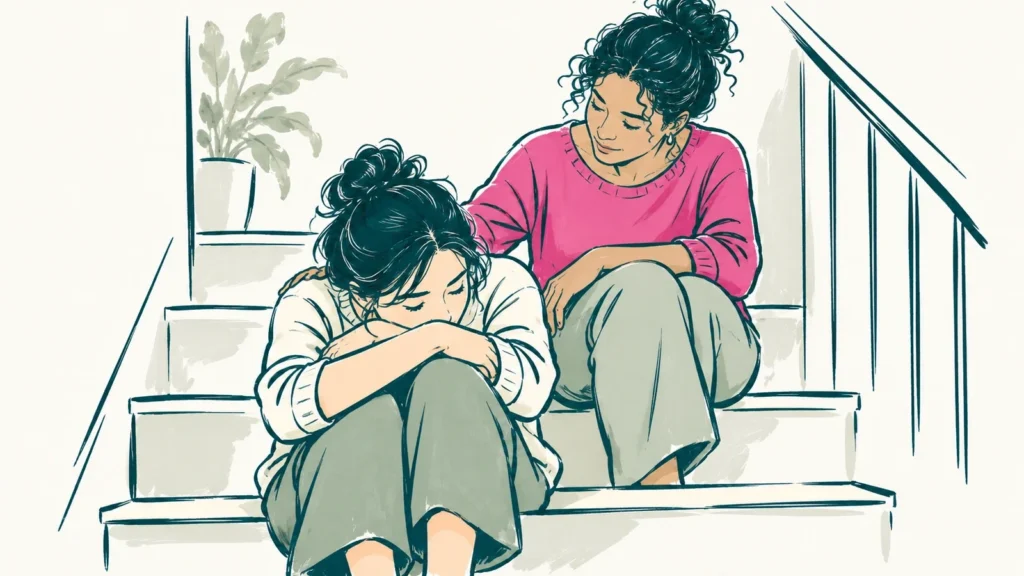
- Talk to someone you trust. Saying the thing you’re ashamed of out loud, to someone who responds with understanding, is one of the most powerful ways to shrink it.
- Notice your inner critic. Shame often speaks in a harsh, absolute voice: always, never, pathetic. Would you speak to a friend that way?
- Practice self-compassion. Research by Kristin Neff and others has found that self-compassion is linked to less shame and depression. Interestingly, it also seems to make people more willing to learn from their mistakes, not less. In a series of studies by Juliana Breines and Serena Chen, people who were encouraged to be kind to themselves after a failure or a moral lapse were more motivated to improve and to make amends.
How to deal with embarrassment
- Remember the spotlight effect. People notice our slips far less than we think. In a well-known study by Thomas Gilovich and colleagues, students wearing an embarrassing T-shirt into a room believed about half the people there would notice it. In reality, only about a quarter did.
- Laugh at it, if you can. A light acknowledgment, “well, that was graceful”, usually puts everyone at ease.
- Let the memory fade. The less you replay it, the less often it will come back.
When to get help
Please talk to a doctor or therapist if guilt or shame is constant, if it’s tied to something traumatic, if it’s affecting your sleep, work or relationships, or if it comes with low mood or thoughts of harming yourself. Persistent, intense guilt and feelings of worthlessness are common signs of depression. If you ever have thoughts of ending your life, contact a crisis line straight away. In the United States you can call or text 988.
A small practice
Think of one thing you feel guilty or ashamed about. Write it down in one sentence. Then underneath, write what you would say to a close friend who told you the same sentence. Read it back slowly, as if it were addressed to you. If something still needs to be put right, write one step you can take this week.
For more on how emotions work, see How to Understand Your Emotions.
Frequently asked questions
What is the difference between guilt and shame?
Guilt is about something you did and tends to push you to repair it. Shame is about who you are and tends to make you want to hide.
Are guilt and shame bad?
Not in themselves. Guilt in its right size helps us repair harm and keep our values. Shame and guilt become a problem when they’re out of proportion, last a long time or attach to things that aren’t our fault.
How do I stop feeling guilty and ashamed?
Repair what you can, separate your actions from your worth, talk to someone you trust, notice harsh self-talk and practice treating yourself with the kindness you’d offer a friend.
Why do I still feel embarrassed about things from years ago?
Embarrassing memories are vivid and easy to replay, and every replay strengthens them. They usually fade when you stop rehearsing them and remember that others noticed far less than you think.