
The short answer
Guilt and shame both follow a mistake, but they point in different directions. Guilt says I did something bad and focuses on the action, which tends to lead to apology and repair. Shame says I am bad and focuses on the whole self, which tends to lead to hiding, defensiveness or blaming others. Research by June Tangney and colleagues links guilt with empathy and making amends, and shame with depression, anxiety and anger. A useful step is to turn shame into guilt by naming the specific action and what you can do about it.
Two people forget a close friend’s birthday. The first thinks: “I can’t believe I forgot. I’ll call her right now and take her out for lunch this week.” The second thinks: “I’m such a terrible friend. She must hate me. I’m always letting people down.” The first calls. The second can’t bring herself to, and avoids her friend for weeks.
Same mistake. Two very different feelings. The first is guilt. The second is shame.
They’re often used as if they mean the same thing, and they do overlap. But the difference between them turns out to matter a great deal, both for how we feel and for what we do next.
The simplest way to tell them apart
The psychologist June Tangney, who has spent decades researching these two emotions, puts it simply:
- Guilt: I did a bad thing.
- Shame: I am bad.
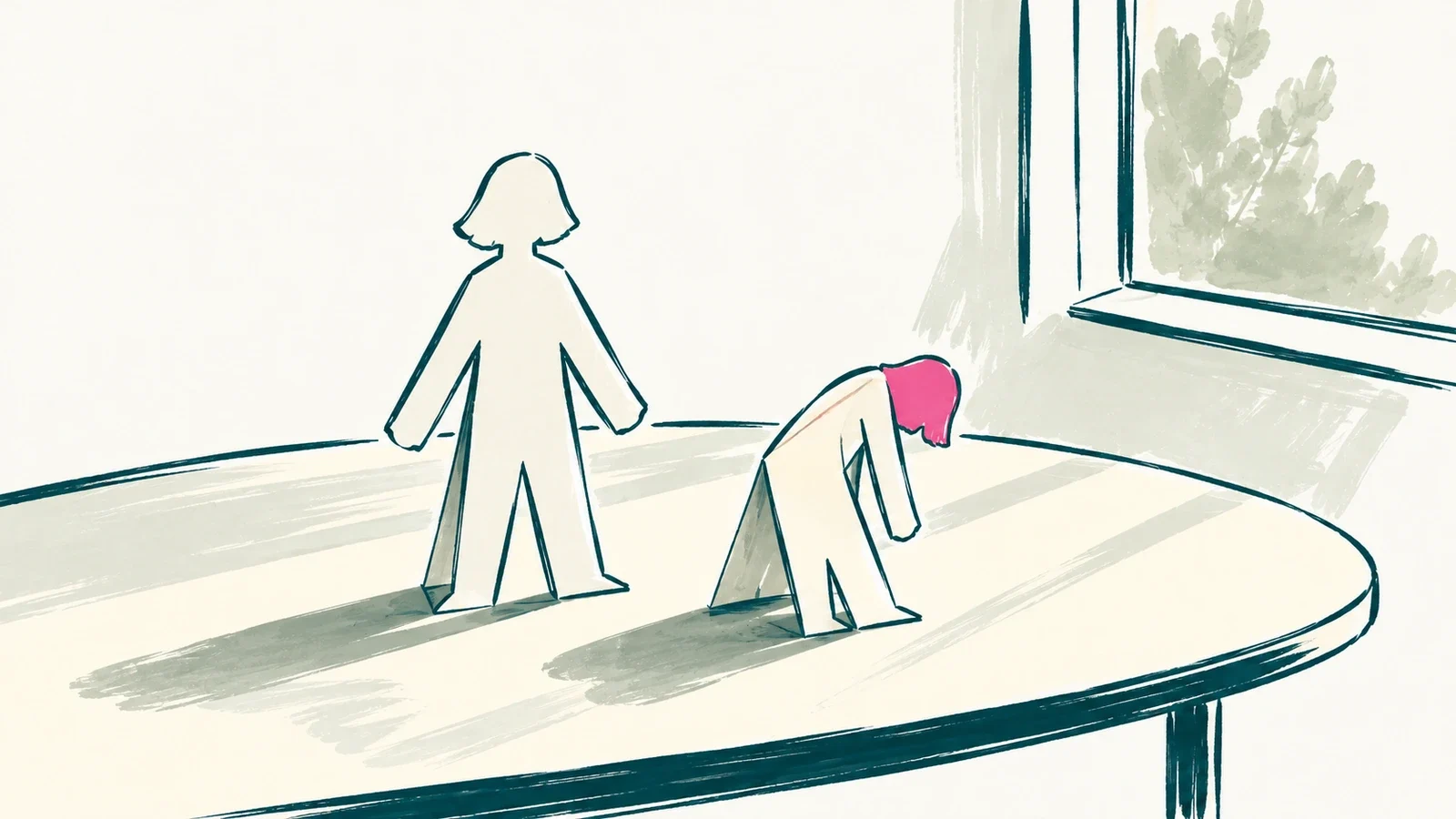
Guilt is about behavior. Shame is about the self. Guilt looks at what you did and wishes you’d done it differently. Shame looks at who you are and wishes you were someone else.
How each one feels
Guilt
- tension and regret
- replaying what you did and thinking about the other person’s feelings
- a strong wish to apologize, explain or put things right
- a sense that this was out of character, something to fix
Shame
- feeling small, exposed or worthless
- a hot face, a sinking stomach, wanting to hide or disappear
- avoiding eye contact and avoiding people
- a sense that this mistake reveals something bad about you
- sometimes anger or defensiveness, as a way to push the feeling away
What each one makes you do
This is where the difference really matters.
Tangney and her colleagues have studied thousands of people across many years. People who tend to respond to mistakes with guilt are, on average, more empathic, better at seeing others’ points of view and more likely to apologize and make amends. Guilt pushes outward, toward the person you hurt.
People who tend to respond with shame are more likely to hide, deny, avoid the situation or blame someone else. Shame pushes inward, toward protecting a self that feels under attack. In the research, a tendency to feel shame has been linked with higher rates of depression, anxiety and low self-esteem, and with more anger and aggression. When people feel ashamed, lashing out can feel like a way to stop feeling small.
One striking example comes from a long-term study of jail inmates by Tangney, Jeffrey Stuewig and Andres Martinez, published in 2014. Inmates who were more prone to guilt were less likely to reoffend in the year after release. Shame didn’t have the same protective effect, and for those who tended to blame others, shame was linked to more reoffending.
Why shame is harder to fix
When you feel guilty, there’s usually something you can do. You can apologize, repair the damage or do better next time. Once you have, the guilt has done its job and can fade.
Shame doesn’t offer a clear way out. If the problem is who you are, what is there to fix? That’s why shame tends to linger, and why people often try to escape it in less healthy ways: hiding, numbing, perfectionism or turning it into anger at others.
Is shame ever useful?
Some researchers argue that shame has a role. It probably evolved to protect our standing in the group, making us careful not to do things that would get us rejected. In small doses, a flash of shame can make us take our behavior seriously.
The problem is when shame is the main way we respond to mistakes, or when it attaches to things that aren’t wrong at all: our bodies, our backgrounds, our feelings or our needs. That kind of chronic shame is covered in Toxic Shame: How to Stop Feeling Ashamed of Yourself.
Where the difference comes from
Many people learn to respond with guilt or with shame in childhood. Parents who focus on the behavior, “hitting hurts, let’s say sorry”, tend to encourage guilt. Parents who focus on the child, “you’re a bad boy”, tend to encourage shame. Over time, children absorb the message and start talking to themselves in the same way.
Culture plays a part too. Some cultures place more emphasis on how one’s actions reflect on family and community, which can make shame more central. But across cultures, the basic difference between focusing on actions and focusing on the self holds up.
How to turn shame into guilt
Because guilt is easier to resolve, one of the most useful things you can do with shame is gently turn it into guilt. Here’s how:
1. Notice the “I am” sentence
Shame usually speaks in sentences about who you are: I’m useless, I’m a bad mother, I’m an idiot. Catch the sentence.
2. Rewrite it as an action
Change “I’m a bad mother” into “I shouted at my daughter this morning when I was tired”. Change “I’m a terrible friend” into “I forgot Sarah’s birthday”. The specific version is still uncomfortable, but it’s something you can work with.
3. Ask what you can do
Once you have a specific action, ask: is there something to repair? An apology, a conversation, a change for next time? If there is, do it. We look at how in How to Deal With Guilt.
4. Talk about it
Shame grows in silence. Telling someone you trust what happened, and hearing them respond with understanding rather than judgment, is one of the quickest ways to shrink it.
5. Treat yourself as you would a friend
If a friend told you she’d snapped at her child, you wouldn’t tell her she was a terrible mother. You’d say she was tired and human, and that she can make it right. Offer yourself the same.
A small practice
Next time you catch yourself in a shame sentence, beginning with “I’m such a…”, stop and rewrite it on paper as a guilt sentence, beginning with “I did…”. Then add one line: “What I can do about it is…” Notice how the feeling changes when the problem moves from who you are to something you did.
For more on these feelings, see How to Deal With Guilt and Shame.
Frequently asked questions
What is the difference between guilt and shame?
Guilt focuses on a specific action, “I did something bad”, and tends to lead to apology and repair. Shame focuses on the whole self, “I am bad”, and tends to lead to hiding, defensiveness or blaming others.
Which is worse, guilt or shame?
Research suggests shame is generally more harmful. It’s linked with depression, anxiety and anger, while guilt in reasonable amounts is linked with empathy and making amends.
Can you feel guilt and shame at the same time?
Yes. They often come together. It helps to separate them so you can act on the guilt and challenge the shame.
How do I stop feeling shame?
Turn it into guilt by naming the specific action, see if there’s something to repair, talk to someone you trust and practice treating yourself with kindness rather than judgment.