
The short answer
Comparing ourselves to others is a natural habit: psychologist Leon Festinger showed that we judge our abilities and lives largely by looking at people around us. The problem comes from constant upward comparison, especially on social media, where we compare our ordinary lives with other people’s highlights. To compare less, notice when you’re doing it, limit what triggers it, compare yourself with your own past instead, turn envy into specific goals, remember what you can’t see in other people’s lives and practice gratitude for what you have.
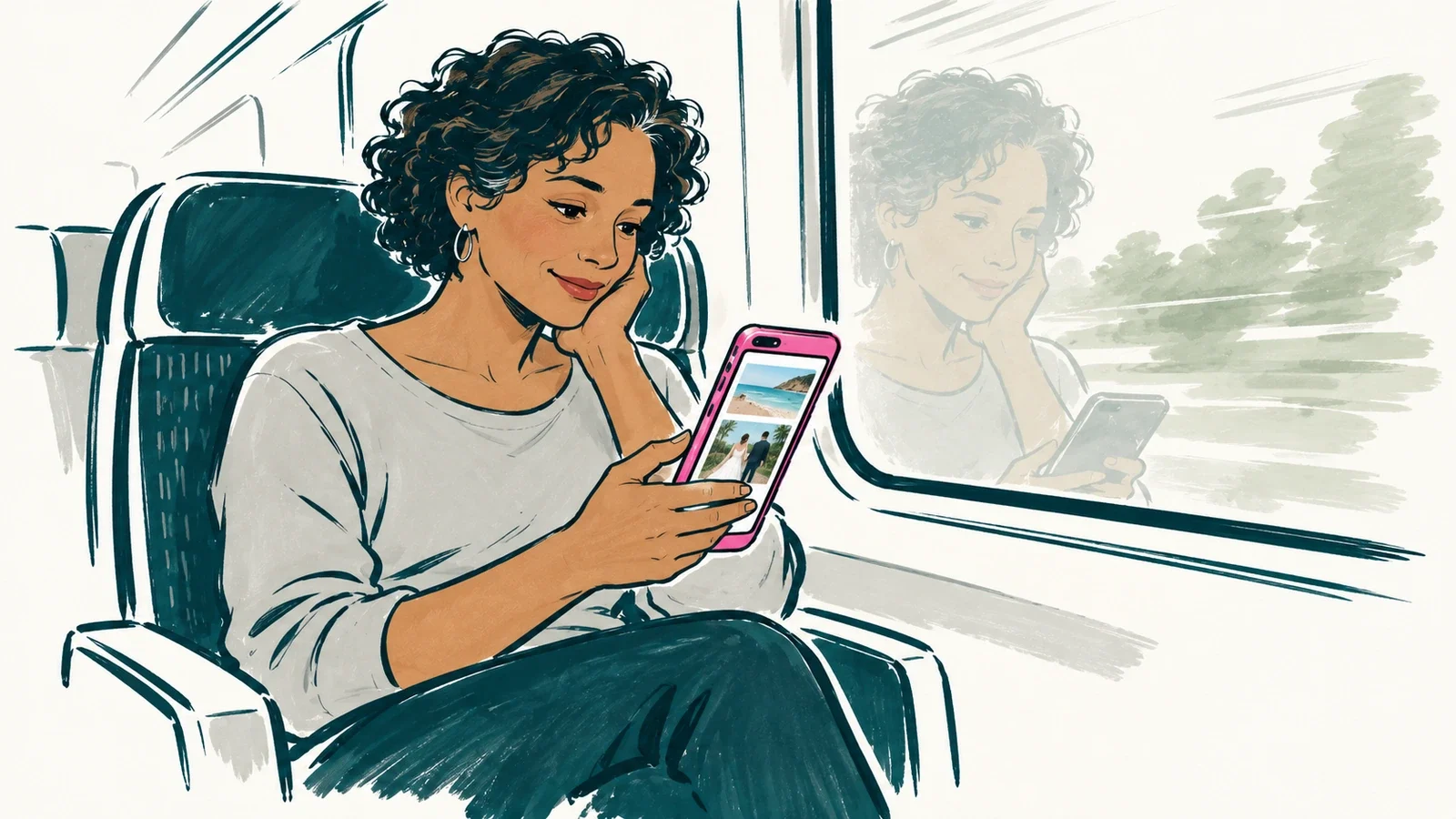
You were having a perfectly good Sunday. Then you opened your phone. A friend from school has just bought a house. A colleague has been promoted. Someone you barely know is running a marathon in Japan. A cousin’s children are all smiling in matching sweaters. By the time you put the phone down, your Sunday doesn’t look so good anymore.
Comparison is one of the quietest ways we make ourselves unhappy. It doesn’t feel like a decision. It just happens, dozens of times a day, and leaves a vague sense that everyone else is doing better.
The line often attributed to Theodore Roosevelt, although nobody has found a record of him saying it, sums it up: comparison is the thief of joy. But comparison isn’t only a thief. It’s also a deeply human habit, and understanding it is the first step to loosening its grip.
Why we compare ourselves to others
In 1954, the psychologist Leon Festinger proposed social comparison theory. His idea was simple: people have a basic need to evaluate their abilities and opinions, and when there’s no objective measure, they do it by comparing themselves to others. Am I a good cook? A good parent? Am I earning enough? There’s no fixed scale, so we look around.
Researchers since then have described two main directions:
- Upward comparison: comparing yourself to people who seem better off. It can inspire, but it often leads to feeling inferior, envious or dissatisfied.
- Downward comparison: comparing yourself to people who seem worse off. It can make you feel better in the moment, but it can also bring guilt or a sense of superiority that doesn’t last.
We also tend to compare most with people who are similar to us: friends, siblings, classmates, colleagues. A stranger’s yacht rarely bothers people. A friend’s new car might.
Why comparison has become harder to escape
For most of history, people compared themselves to a small circle of neighbors and relatives. Now we can compare ourselves to hundreds of people every day, and we see a very particular version of their lives.
Social media shows the highlights: holidays, achievements, celebrations, flattering photos. Few people post their arguments, debts, rejections or ordinary Tuesday evenings. So we end up comparing our full, messy reality with other people’s best moments.
Research supports what many people feel. A 2014 study by Erin Vogel and colleagues found that people who used Facebook more often had lower self-esteem, and that this was linked to more frequent upward comparisons. In a 2018 experiment at the University of Pennsylvania, Melissa Hunt and colleagues asked students to limit their social media use to about ten minutes per platform per day for three weeks. Compared with a group who carried on as normal, they reported significant reductions in loneliness and depression.
What comparison costs
When comparison becomes a habit, it can:
- lower self-esteem and confidence
- feed envy and resentment, even toward people you like
- make you feel your life is always lacking, whatever you achieve
- distract you from your own goals and values
- make it harder to enjoy good things, because someone else always has more
It also tends to be inaccurate. We compare our insides with other people’s outsides, our doubts with their confidence, our full stories with their edited ones.
How to stop comparing yourself to others
1. Notice when you’re doing it
Comparison is mostly automatic, so the first step is catching it. Pay attention to the moment your mood drops after seeing something. Name it: “I’m comparing.” That small label puts a little distance between you and the feeling.
2. Know your triggers
Most people have particular triggers: certain apps, certain people, certain topics like money, weight or parenting. Notice yours. You may find that a handful of accounts or situations are responsible for most of the comparisons that hurt.
3. Change your feed
You’re allowed to curate what you see. Mute or unfollow accounts that consistently make you feel worse. Follow people who inspire, teach or make you laugh. Spend less time scrolling, especially first thing in the morning and last thing at night, when mood is more fragile.
4. Compare yourself with your past self
A fairer comparison is with who you were a year ago, or five years ago. What have you learned? What have you come through? Progress against your own past is something you can actually measure, and it’s usually more encouraging.
5. Remember what you can’t see
When someone’s life looks perfect, remind yourself that you’re seeing a tiny, selected part of it. The friend with the new house may be struggling with debt. The colleague with the promotion may be exhausted. You don’t need to wish them problems. Just remember that every life has more in it than the photos show.
6. Turn envy into a goal, or let it go
When a comparison stings, ask: what exactly do I want here? Sometimes the answer is something you could work toward, like more time outdoors, a career change or getting fitter. Then the comparison becomes useful. Sometimes the answer is something you don’t actually want, or can’t have. Then it’s worth letting it go. How to Deal With Envy has more on this.
7. Know what matters to you
Comparison is strongest when you’re unsure of your own values. If you’re clear about what matters to you, whether it’s family, creativity, freedom, health or kindness, other people’s choices matter less. Someone else’s big house only stings if you’ve accepted that a big house is the measure of success.
8. Practice gratitude
Gratitude is a natural counterweight to comparison. While comparison looks at what you lack, gratitude looks at what you have. Research on gratitude, including studies by Robert Emmons and Michael McCullough, has found that regularly noting things you’re grateful for is linked with greater well-being. We look at it in The Benefits of Gratitude and How to Practice It.
9. Celebrate others when you can
It may sound backwards, but genuinely celebrating other people’s good news, sending a congratulations, asking about it, sharing their happiness, can reduce the sting of comparison. It turns the other person from a rival into someone you’re connected to.
When comparison is linked to something more
If comparing yourself to others leaves you feeling worthless, very low or anxious, or if it’s tied to your body, eating or appearance in a way that’s affecting your health, please talk to a doctor or therapist. Constant negative comparison can be part of depression, social anxiety and body image problems, and help is available.
A small practice
For the next week, every time you notice yourself comparing, write down three things: who or what you compared yourself to, how you felt, and what you actually want. At the end of the week, cross out every item where the honest answer to the last question is “nothing really”. Look at what’s left. That short list is far more useful than a week of scrolling.
For more on these feelings, see How to Deal With Jealousy.
Frequently asked questions
Why do I compare myself to others?
Because comparison is a natural way humans judge their abilities and lives, especially when there’s no clear standard. Social media makes it far more frequent and usually less fair.
How do I stop comparing myself to others on social media?
Notice your triggers, mute or unfollow accounts that make you feel worse, limit your time on the apps and remember that you’re seeing other people’s highlights, not their whole lives.
Is comparing yourself to others always bad?
No. Comparison can inspire and help you learn. It becomes harmful when it’s constant, mostly upward and leaves you feeling inferior or resentful.
Who said comparison is the thief of joy?
The line is often attributed to Theodore Roosevelt, but there’s no record of him saying it. Its origin is uncertain.