
The short answer
An emotion wheel is a chart that arranges feelings in rings, with a few broad emotions in the center and more specific ones toward the edge. To use it, start in the middle with the broad feeling, such as sad or angry, then move outward until you find the word that fits best, such as lonely, disappointed or resentful. Naming a feeling precisely helps because research shows that labeling an emotion tends to reduce its intensity, and because a specific word points to a specific response.
Ask most people how they are and you’ll hear one of about five answers. Fine. Tired. Stressed. Not great. Busy.
None of them is a lie. But none of them says much either. “Stressed” might mean worried about money, resentful about doing more than your share at home, nervous about a medical result or simply short of sleep. Each of those needs something different. And if you don’t know which one it is, it is hard to know what would help.
That is where an emotion wheel comes in. It is one of the simplest tools in psychology, and one of the most useful.
What is an emotion wheel?
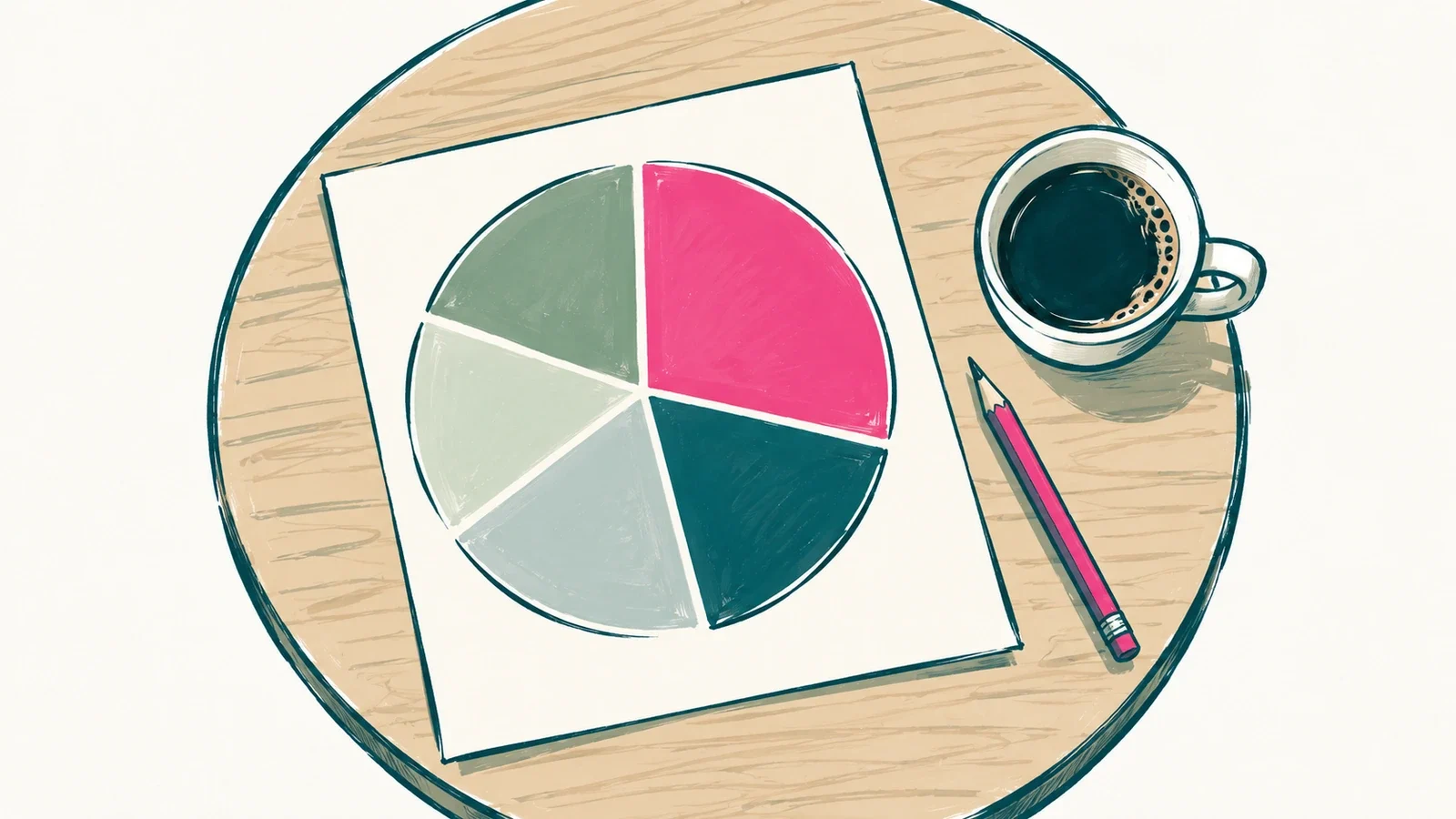
An emotion wheel, sometimes called a feelings wheel, is a circle divided into sections, each holding the name of a feeling. The broad emotions sit in the center. As you move outward, each one breaks into more specific feelings.
There are two well-known versions:
- Plutchik’s wheel of emotions. The psychologist Robert Plutchik proposed in 1980 that there are eight primary emotions: joy, trust, fear, surprise, sadness, disgust, anger and anticipation. His wheel arranges them in opposite pairs, joy opposite sadness, fear opposite anger, and shows how they shade into stronger or milder forms. Rage is intense anger, annoyance a mild one.
- The Feelings Wheel by Gloria Willcox. Published in 1982 for therapists, it puts six core feelings in the center: mad, sad, scared, joyful, powerful and peaceful. Around them are rings of more specific words, so “scared” leads to words like anxious, insecure, rejected and helpless.
Many modern versions mix the two. It doesn’t matter much which one you use. What matters is having a list of words in front of you when your own vocabulary runs dry.
Why naming a feeling helps
It can seem a little odd that finding the right word would change anything. The feeling is the same whatever you call it, surely?
Research suggests otherwise. In a 2007 study led by Matthew Lieberman at UCLA, people looking at pictures of emotional faces showed less activity in the amygdala, a brain area involved in alarm, when they labeled the emotion than when they simply looked at it. Labeling was linked with more activity in a region of the prefrontal cortex involved in regulating feelings. Psychologists call this affect labeling, and later studies have found similar calming effects in everyday situations, including in people facing things they fear.
The psychiatrist Dan Siegel coined a phrase for it that has caught on with parents and teachers: name it to tame it.
There is a second, more practical reason. A precise word tells you what to do next:
- Lonely points toward reaching out to someone.
- Overwhelmed points toward doing less, or asking for help.
- Disappointed points toward adjusting an expectation, or saying that something mattered to you.
- Resentful points toward a boundary or a conversation you have been putting off.
- Ashamed points toward self-kindness, and often toward telling someone you trust.
“Bad” points nowhere.
Researchers call the ability to make these fine distinctions emotional granularity. Studies reviewed by Todd Kashdan, Lisa Feldman Barrett and Patrick McKnight found that people with higher granularity tend to cope better under stress. They are less likely, for example, to drink heavily or act aggressively when strong negative feelings arrive.
How to use an emotion wheel, step by step
1. Start in the center
Ask which of the broad feelings is closest. You don’t need to be sure. Mad, sad, scared, joyful, powerful, peaceful: which one is nearest, even roughly?
2. Move outward slowly
Look at the words in the next ring. Read each one and notice whether it fits. Your body often answers before your mind does: there may be a small sense of recognition, a sigh or a “yes, that’s it” when you hit the right word.
3. Keep going until the word is specific
From sad you might move to lonely, then to isolated or left out. From mad you might move to frustrated, then to irritated or let down. The outer ring usually holds the most useful words.
4. Allow more than one
Feelings often come in pairs or groups. You can be relieved and guilty at the same time, or proud and anxious. If two words fit, use both. Mixed feelings aren’t a sign you are confused. They are a sign you are paying attention.
5. Ask what the feeling is about
Once you have the word, add the reason. Not to argue with the feeling, just to understand it. “I feel left out because they made plans without me” is something you can work with.
When no word fits
Sometimes you go round the whole wheel and nothing quite fits. That’s fine. A few things to try:
- Describe the body instead. “Tight chest, restless legs, can’t sit still” is a perfectly good description. It often turns into a word later.
- Use an image. “Like a balloon about to pop” or “like being underwater” can be clearer than any word on the chart.
- Check the basics. Hunger, tiredness, pain and illness can feel very like emotions. Sometimes “irritable” is really “haven’t eaten since breakfast”.
- Wait. Some feelings become clearer after a walk, a night’s sleep or a conversation.
If you often find you can’t name or feel much at all, that is worth looking at in its own right. We cover it in Emotional Numbness: Why Do I Feel Nothing?
Ways to build a bigger feelings vocabulary
Like any language, the language of emotions grows with use. A few ways to practice:
- Keep a wheel where you’ll see it. A picture on your phone or on the fridge makes it easy to check in the moment.
- Read fiction. Novelists spend their lives describing feelings precisely. Noticing how a character’s feelings are described adds words to your own vocabulary.
- Write it down. The psychologist James Pennebaker found that writing about emotional experiences for fifteen to twenty minutes over a few days was linked with better well-being and even fewer doctor visits in some studies. You don’t need to write well. You just need to find words.
- Use it in conversation. Instead of “I’m fine”, try one honest specific word with people you trust: “I’m a bit flat today” or “I’m nervous about tomorrow”. It gets easier, and people often respond with more warmth than you’d expect.
- Notice good feelings too. Content, grateful, amused, proud, hopeful: positive emotions also have shades, and naming them helps you notice and enjoy them more. We look at those in Positive Emotions.
Using the wheel with children
Emotion wheels are widely used with children, and they work well because children often feel big things with very few words. Pointing to faces or colors on a chart can be easier than talking. If you use one with a child, try naming your own feelings out loud too: “I’m frustrated because the car won’t start.” Children learn the language of emotions mostly by hearing adults use it.
A small practice
Find an emotion wheel online and save it on your phone. Each evening this week, before you go to bed, choose the outer-ring word that best describes the strongest feeling you had that day. Not the most important event, the strongest feeling. After seven days, you’ll have a small map of your week that you could never have written with “fine” and “stressed”.
For more on why understanding feelings matters, see How to Understand Your Emotions.
Frequently asked questions
What is an emotion wheel?
A chart that arranges feelings in a circle, with broad emotions in the center and more specific ones toward the edge. It helps you find the precise word for what you feel.
Who created the emotion wheel?
The best-known versions are Robert Plutchik’s wheel of emotions, from 1980, built around eight primary emotions, and Gloria Willcox’s Feelings Wheel, from 1982, built around six core feelings.
How do I use a feelings wheel?
Start with the broad feeling in the center that seems closest, then move outward ring by ring until you find the most specific word that fits. It’s fine if more than one word fits.
Does naming emotions really help?
Research on affect labeling suggests it does. Putting a feeling into words tends to reduce its intensity, and a precise word makes it easier to see what you need.