
The short answer
Gratitude means noticing and appreciating what is good in your life and, often, recognizing that it comes partly from others. Research links regular gratitude practice with higher well-being, more optimism, better relationships and, in some studies, better sleep and fewer physical complaints. Effective ways to practice include writing down a few things you’re grateful for once or twice a week, writing a thank-you letter, telling people specifically what you appreciate and noticing small good moments during the day. Gratitude works best when it’s genuine, specific and not forced.
You’ve probably heard it before: be grateful. It’s said so often that it can start to sound like a chore, or worse, a way of telling people not to complain. “At least you have a job.” “Think of all the people worse off than you.”
That’s not what gratitude really is, and it’s not what the research is about. Real gratitude isn’t pretending everything is fine. It’s noticing what is good, even when other things aren’t. And the evidence that it helps is surprisingly strong.
What gratitude is
Gratitude is the feeling of appreciating something good in your life. It often includes a sense that the good thing came, at least partly, from outside yourself: from another person, from luck, from nature or from something larger.
Psychologists sometimes distinguish between gratitude as a passing emotion, the warm feeling when someone does something kind for you, and gratitude as a habit, a general tendency to notice and appreciate what’s good. Both can be cultivated.
The benefits of gratitude
Better mood and well-being
In one of the best-known studies, published in 2003, Robert Emmons and Michael McCullough asked people to write down, once a week for ten weeks, five things they were grateful for. Others wrote about hassles or neutral events. The gratitude group felt more optimistic about the coming week and better about their lives overall. They also reported fewer physical complaints and spent more time exercising.
In a 2005 study, Martin Seligman and colleagues tested several positive psychology exercises. One was the gratitude visit: writing a letter of thanks to someone who had been kind to you but had never been properly thanked, and delivering it in person. It produced the largest immediate boost in happiness of any exercise tested, though the effect faded after about a month. Another exercise, writing down three good things each day, produced smaller but longer-lasting benefits.
Stronger relationships
Gratitude seems to strengthen bonds. Research by Sara Algoe and colleagues suggests that expressing gratitude helps people find, remind and bind relationships: it draws attention to people who are good for us and makes them feel valued, which makes them more likely to stay close. In couples, feeling appreciated is linked with greater relationship satisfaction.
Better sleep
Some studies have found that people who feel more grateful sleep better, possibly because they’re more likely to have positive thoughts before bed and fewer worried ones.
A counterweight to comparison and envy
Gratitude shifts attention from what you lack to what you have. That makes it a natural counterweight to the habit of comparing yourself to others. How to Stop Comparing Yourself to Others explores this further.
A word of caution
The benefits of gratitude are real, but they’re usually modest rather than dramatic. Some reviews have found smaller effects than early studies suggested. Gratitude is one helpful habit among many, not a cure for everything. And it’s not a replacement for treatment if you’re struggling with depression or anxiety.
Why gratitude can feel forced
Many people try gratitude and give up because it feels fake. That usually happens when:
- It’s used to dismiss real problems. Gratitude doesn’t mean ignoring what’s hard. You can be grateful for your home and still be stressed about the rent.
- It becomes a chore. Writing the same three things every day can turn into a box-ticking exercise.
- It comes with guilt. “I should be more grateful” is not gratitude. It’s self-criticism.
The trick is to keep it genuine, specific and light.
How to practice gratitude
Write it down, but not too often
A gratitude journal is the most studied method. Interestingly, research by Sonja Lyubomirsky and colleagues found that people who counted their blessings once a week got more benefit than those who did it three times a week, possibly because doing it too often made it feel routine. Try once or twice a week, and write about different things each time.
Be specific
“I’m grateful for my family” is fine, but it fades quickly. “I’m grateful my sister called on Tuesday just to see how I was” brings the feeling back. Details make gratitude real.
Notice why
Add a line about why each good thing happened, or what it meant to you. This deepens the feeling and helps you notice the people and circumstances behind it.
Write a thank-you letter
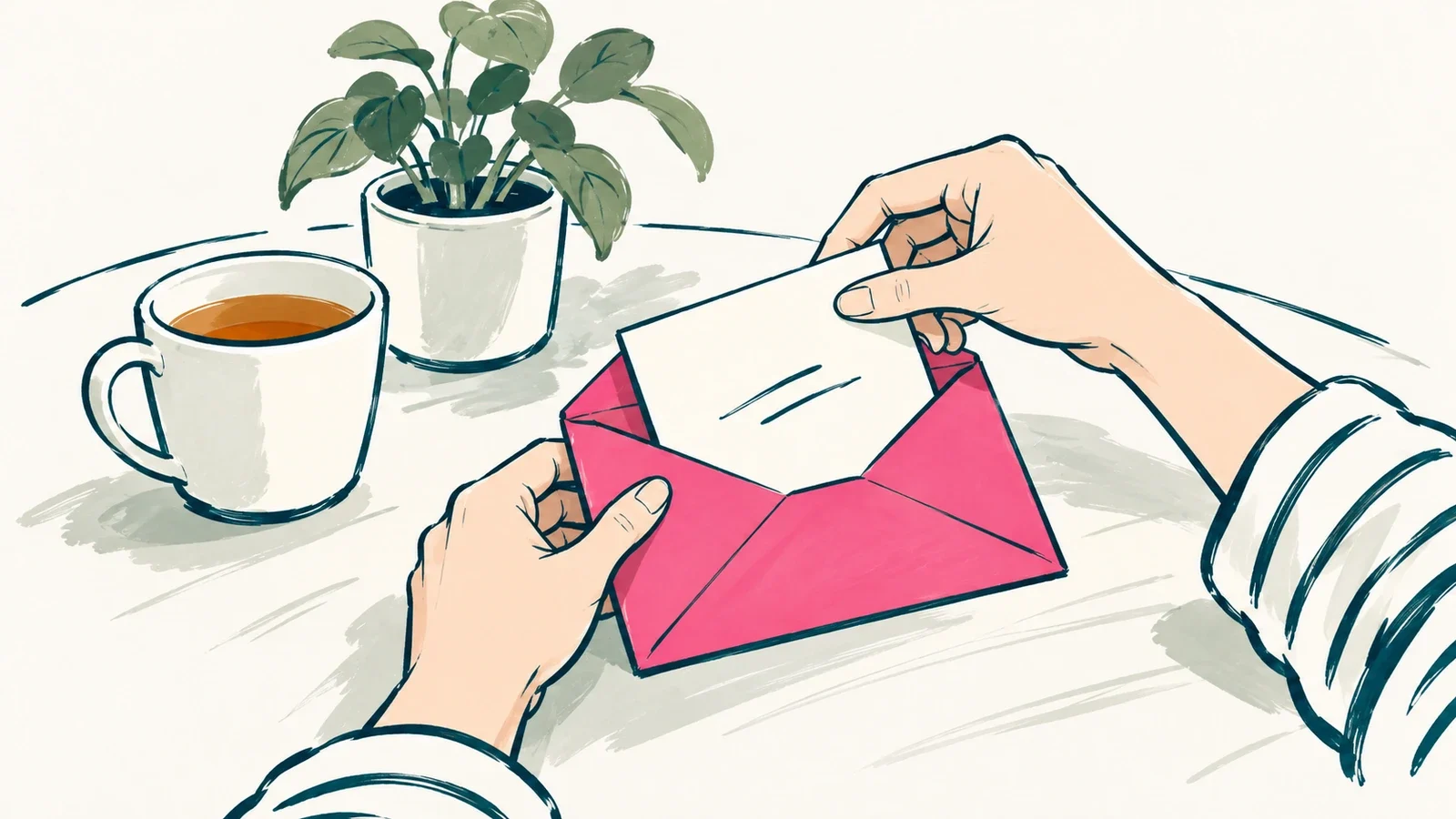
Think of someone who made a difference in your life and never heard properly how much. Write them a letter saying exactly what they did and what it meant. If you can, read it to them or send it. Research by Amit Kumar and Nicholas Epley found that people who wrote gratitude letters consistently underestimated how surprised and happy the recipients would be, and overestimated how awkward the recipients would feel.
Say it out loud
Tell people what you appreciate about them, specifically and often. “Thank you for listening last night, it really helped” is a small sentence that can mean a lot.
Catch good moments as they happen
Gratitude doesn’t have to wait for a journal. When something good happens, a warm shower, a funny message, a quiet moment, pause for a few seconds and notice it. This connects to savoring, which we cover in How to Enjoy Life More.
Use reminders
Some people find it helpful to link gratitude to an existing habit: thinking of one good thing while the kettle boils, at the dinner table or before sleep.
Be grateful for what you’d miss
A technique researchers call mental subtraction: imagine your life without something you value, a friend, your health, your home, and notice how it changes your feelings toward it. This can help counter the way we get used to good things.
Gratitude in hard times
Gratitude can be especially helpful in difficult periods, as long as it isn’t used to deny the difficulty. In a hard week, gratitude might be very small: a kind nurse, a warm bed, a friend who sent a message. Noticing these doesn’t make the hardship disappear. It just reminds you that the hardship isn’t the only thing there.
A small practice
This week, think of one person who has helped you in a way you’ve never fully thanked them for. Write them a letter of about a page, describing exactly what they did and how it affected your life. If you can, deliver it in person and read it aloud. If that isn’t possible, send it. Notice how you feel afterwards, and how they respond.
For more on happiness, see How to Be Happy.
Frequently asked questions
What are the benefits of gratitude?
Research links gratitude with better mood, more optimism, stronger relationships, better sleep and, in some studies, fewer physical complaints. The effects are real but usually modest.
How do I practice gratitude?
Write down a few specific things you’re grateful for once or twice a week, write thank-you letters, tell people what you appreciate and pause to notice good moments as they happen.
Why does gratitude make you happier?
It shifts attention toward what’s good, counters the tendency to get used to positive things, strengthens relationships and helps balance out comparison and envy.
How often should I write in a gratitude journal?
Research suggests once or twice a week may work better than every day, because it stays fresh and meaningful rather than becoming routine.